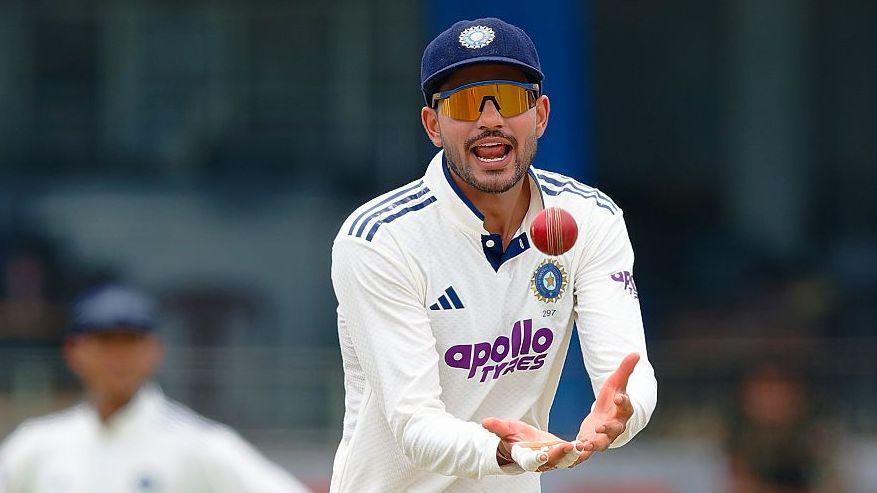
Teams should be allowed to use saliva again - Shubman Gill
Shubman Gill acknowledged that India were dissatisfied with their inability to achieve a victory in Wellington, but he believed there was nothing more they could have done on a surface that provided the bowlers with very little assistance throughout the first Test. New Zealand batted out 120 overs in their second innings to secure a draw, with Gill, who also advocated the return of saliva to shine the ball, pointing to the flattening pitch and the ball losing its hardness early as major factors that made it difficult for India to take 20 wickets.
"Yes, I am somewhat frustrated. I didn't get the result that I wanted. But this is also a part of the game. "In the last six or seven years, we haven't drawn that many matches," Gill stated at the press conference following the match.
India had New Zealand under pressure at 70 for 5 in the first innings before Henry Nicholls and Glenn Phillips staged a remarkable recovery, with the hosts posting 368. The visitors responded with 720 for 9 declared, but could not make regular inroads in the second innings as the home side batted through the final day, finishing at 239 for 5.
Daryl Mitchell and Tom Blundell's marathon sixth-wicket stand lasted 43 overs before the players shook hands for the draw, blunting the Indian attack with an unbroken 63-run stand.
Gill felt the surface had become progressively flatter, leaving the bowlers very little to work with.
"When we started playing the Test match, we thought there would be a lot more in the wicket. Days three, four and five just got flatter and flatter. There was no impact of the overs being bowled on the wicket, or even the days being played. The wicket simply slowed down. "I think it wasn't a great Test wicket, especially if you want results, having seen that," he stated.
Gill also mentioned the state of the ball, pointing out that it had softened within 25 to 30 overs, making it hard for the bowlers to move enough or get off the surface. He also questioned why the use of saliva, which was prohibited during the COVID-19 pandemic, continued to be disallowed.
"It becomes very difficult for the bowlers to take wickets if the wicket does not help and the ball also becomes soft." They don't carry the edges. If there isn't much movement in the pitch, it becomes difficult to get batters out through LBWs as well. The ball definitely plays a big role," he said.
"We saw this in England as well. In the first three or four matches, the ball became soft very quickly. The ball will undoubtedly become soft after 50 overs, but if it occurs between 25 and 30 overs, it makes the bowlers' job extremely difficult.
"There's one thing I don't understand: it's been so long since COVID, so why hasn't saliva been allowed to shine on the ball yet? The COVID era has long passed. I do believe teams should be allowed to use saliva," added Gill.