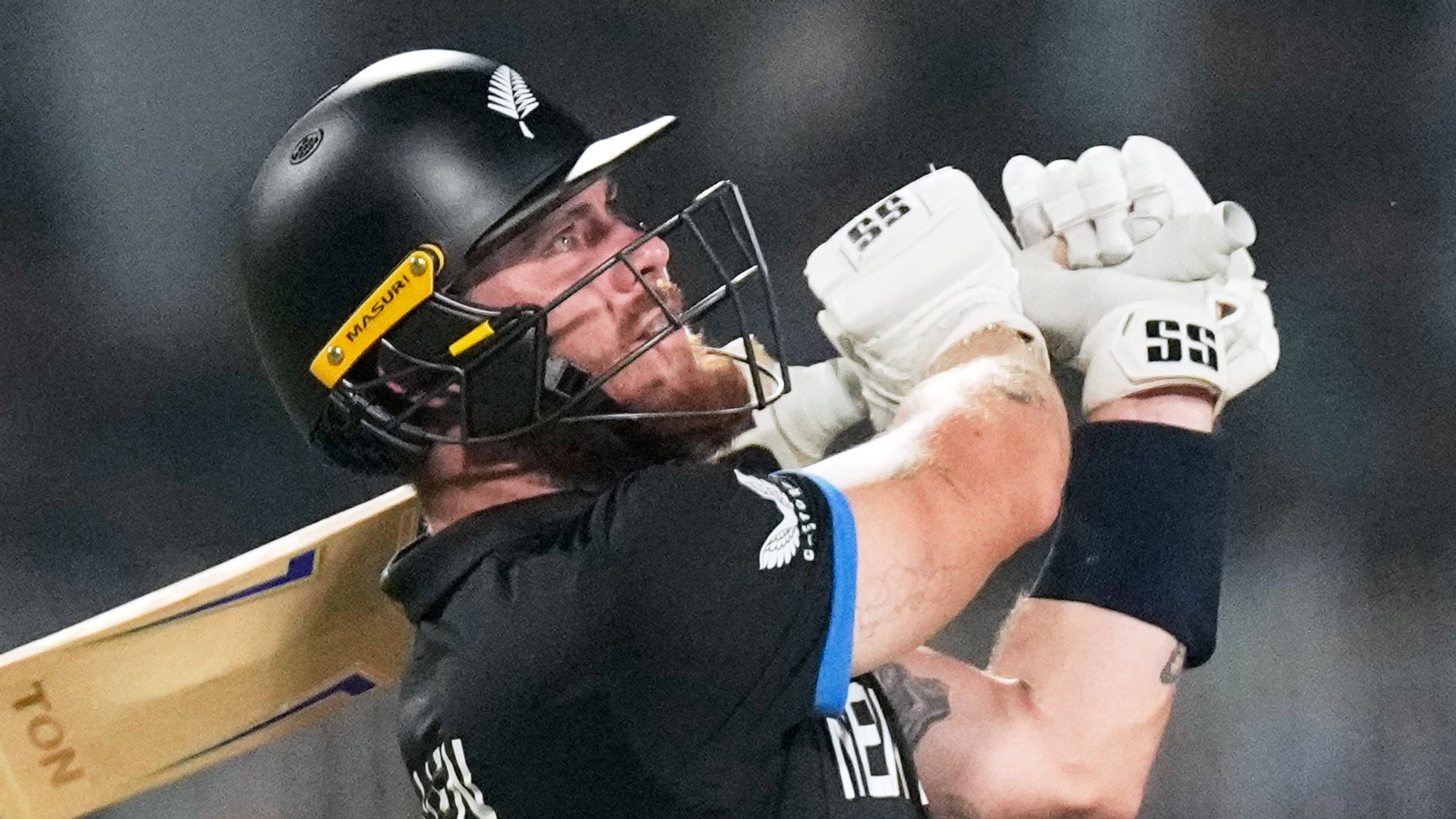
Finn Allen's record ton puts New Zealand into T20 WC final
Up until the knockout round, South Africa, the most dominant team in the 2026 T20 World Cup, was back to square one. At the Eden Gardens, their old nemesis returned: the pressure, the occasion, and the crumbling under it. New Zealand, who only days ago had left their qualification fate in Sri Lanka's hands, once again turned streetwise and composed, taking charge of a big game with the kind of tactical intelligence that defines their cricket. They march on to the final at the Narendra Modi Stadium, chasing the one prize that slipped through their fingers in 2021.
This was almost exactly like the battle that took place between these two teams in the group stage 20 days ago, except that the situation had drastically changed. That game had ended in a ruthless victory for South Africa, who had easily defeated New Zealand by a meager score. Today, New Zealand denied them a return ticket to Ahmedabad. The famous Eden Gardens was transformed into a personal playground by Finn Allen and Tim Seifert, who will soon reunite as KKR teammates in the IPL next month. In the Powerplay, they destroyed 84 runs of a 170-run target. The remaining chase was nothing more than showmanship. In a 33-ball 100*, Allen hit 10 fours and 8 sixes, the fastest ton in T20 World Cup history. He also broke the Chris Gayle record by 14 balls and brought New Zealand home with a staggering 7.1 overs to spare, a margin that clearly demonstrated how completely lopsided this had become.
Markram had a painful time during the game's second half and final stages. However, Mitchell Santner correctly called the toss and his bowlers immediately responded on a slightly dry surface, effectively winning the game much earlier. A late injury replacement in the squad, Cole McConchie was included in the XI as a specific match-up option. In the one over he bowled, he got rid of both left-handers Quinton de Kock and Ryan Rickelton off consecutive deliveries, leaving South Africa reeling at 12 for 2.
When Lockie Ferguson had Aiden Markram chip straight to midwicket, where Rachin Ravindra had a straightforward chance, South Africa should have been in even more trouble. Markram and Dewald Brevis reacted intently, scoring 17 off a James Neesham field goal to increase the Powerplay's overall score to 48 for 2.
However, momentum was fleeting. Ravindra atoned for his earlier lapse by drawing Markram into a horrible miscue down the ground, Daryl Mitchell completing a tumbling catch at long on that survived third umpire scrutiny. David Miller, the man who helped South Africa emerge from a similar predicament against India, entered. He too was immediately handed a lifeline when Glenn Phillips grassed a relatively straightforward chance at deep extra cover. However, Miller was unable to withstand Ravindra in the same way. The mistake this time went unnoticed for a considerable amount of time thanks to a deceptively subtle slowdown.
When Brevis fell two balls later, South Africa were 77 for 5, and any semblance of hope was fast disappearing. Before finally breaking loose, Marco Jansen and Tristan Stubbs began a measured rebuild, grinding their way to 113 for 5 at the end of the 16th over. After scoring 15 off Matt Henry, Jansen and Stubbs turned their attention to Neesham, clearing the boundary in a brutal 22-run over that briefly suggested a competitive total was still within reach. Each player cleared the boundary.
However, Lockie Ferguson had different plans. With a sharp leg cutter, he returned to bowl Stubbs, ending the partnership just as it was about to become decisive. Jansen continued on his own with remarkable composure, hitting two sixes for a 27-ball fifty, but he only faced one delivery in the final over as South Africa missed the 180-run psychological target.
Even 50 more runs might not have been enough, as it turned out. The chase by New Zeland got off to a slow start, with 19 runs in the first two overs and a few half-chances falling horribly short of South African fielders. That was the closest Markram's men would get to halting the current. In the third over, Allen and Seifert destroyed Jansen and took 22 off Corbin Bosch to end a Powerplay that had almost decided the game.
Then the numbers were everything. Seifert hit 28 balls to reach his half-century. In the very next over, Allen got there nine balls faster. In the tenth over, Kagiso Rabada finally broke their 117-run stand, but the devastation was far from over. Allen went from 50 to 100 in just 14 balls, reaching the milestone with the game's final scoring shot. This was a fitting end to a well-known victory that was concluded with a performance that was up to par.